1. Mega takeover in Australia’s real estate sector
A Brookfield-GIC consortium agreed to acquire National Storage REIT in Australia for A$4 billion, marking one of the largest take-private transactions ever in the country’s property market. This deal highlights strong institutional demand for defensive and cash-producing assets, especially in niche sectors like self-storage, and suggests continued appetite for stable real estate returns amid economic uncertainty. Impact: may trigger further large-scale consolidation and increased competition among global investment firms in alternative property sectors.
2. Rising U.S. foreclosure activity and housing market stress
Foreclosures in the U.S. jumped around 21% in November 2025, reflecting financial pressures among homeowners as higher costs and mortgage stress persist. Regions like Nevada, New Jersey, and Florida saw notable increases. Impact: this trend could modestly boost housing supply, cool down pricing in overheated markets, and offer strategic opportunities for investors specializing in distressed assets or affordable housing.
3. Positive real estate outlook amid global volatility
Industry voices (e.g., Knight Frank) point out that property is increasingly viewed as a stable, yield-oriented asset class relative to equities and bonds, with strong rental income prospects and continued demand across segments like luxury housing and fractional ownership platforms. Technology-driven, more accessible investment models are gaining traction, especially among younger investors. Impact: this long-term repositioning may attract more diversified capital flows into real estate and encourage digital innovation in investment vehicles.
4. Expansion of Indian developer into global luxury market (Dubai)
Indian real estate company Casagrand launched a ₹1,000 crore luxury residential project in Dubai and signaled plans for a broader UAE pipeline. This international expansion reflects strong cross-border investment demand in premium housing markets. Impact: may strengthen Middle East real estate as an investment hub and promote more developer participation from emerging markets.
5. Shifts in international buyer behavior
Canadian “snowbirds” (seasonal foreign buyers) are retreating from parts of the U.S. housing market due to tariffs and currency effects, though demand remains in warmer metro areas. Impact: foreign capital flows are shifting within North America, potentially redistributing investment yields and price dynamics across regions.
6. Ongoing returns from income-producing portfolios
Northwest Healthcare Properties REIT maintained distributions in November, underscoring investor interest in healthcare infrastructure assets that offer stable monthly cash flows. Impact: healthcare and other specialized REIT sectors may continue attracting institutional and retail capital seeking diversification and reliable income.
---
Broader Macro and Market Themes
Global Investment Growth Forecasts:
Analysts project that global real estate investment could exceed US $1 trillion in 2026, driven by recovering capital deployment and improved alignment of buyer-seller price expectations after a period of rate-induced caution. This reflects constructive momentum for cross-border investment activity heading into the next year.
Market sentiment and borrowing conditions:
Some markets display signs of price stabilization and improved borrowing capacity, which may support renewed investor confidence in both residential and commercial property segments.
Regional variations persist:
While some areas (like parts of the U.S. housing market) experience softening, others (such as India’s office and luxury residential sectors) are showing strong demand fundamentals, highlighting that real estate investment opportunities remain deeply regional and sector-specific.
---
Future Impact Summary
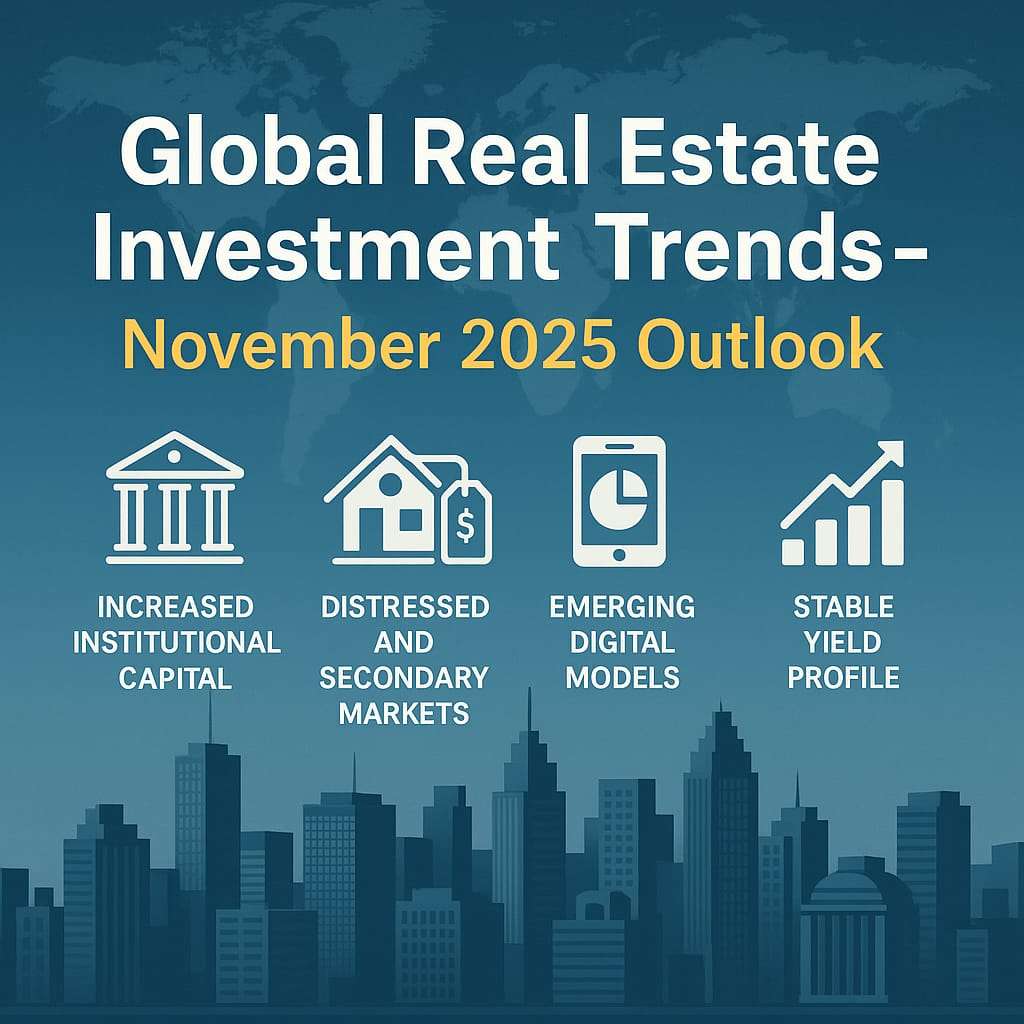
📌 Increased institutional capital into alternative and resilient sectors (self-storage, healthcare, luxury)
📌 Distressed and secondary markets may offer value entry points due to foreclosure trends
📌 Emerging digital models (e.g., fractional ownership) could broaden investor participation
📌 Cross-border flows shifting to dynamic global hubs like Dubai and other GCC markets
📌 Stable yield profile continues to make real estate attractive against financial market volatility