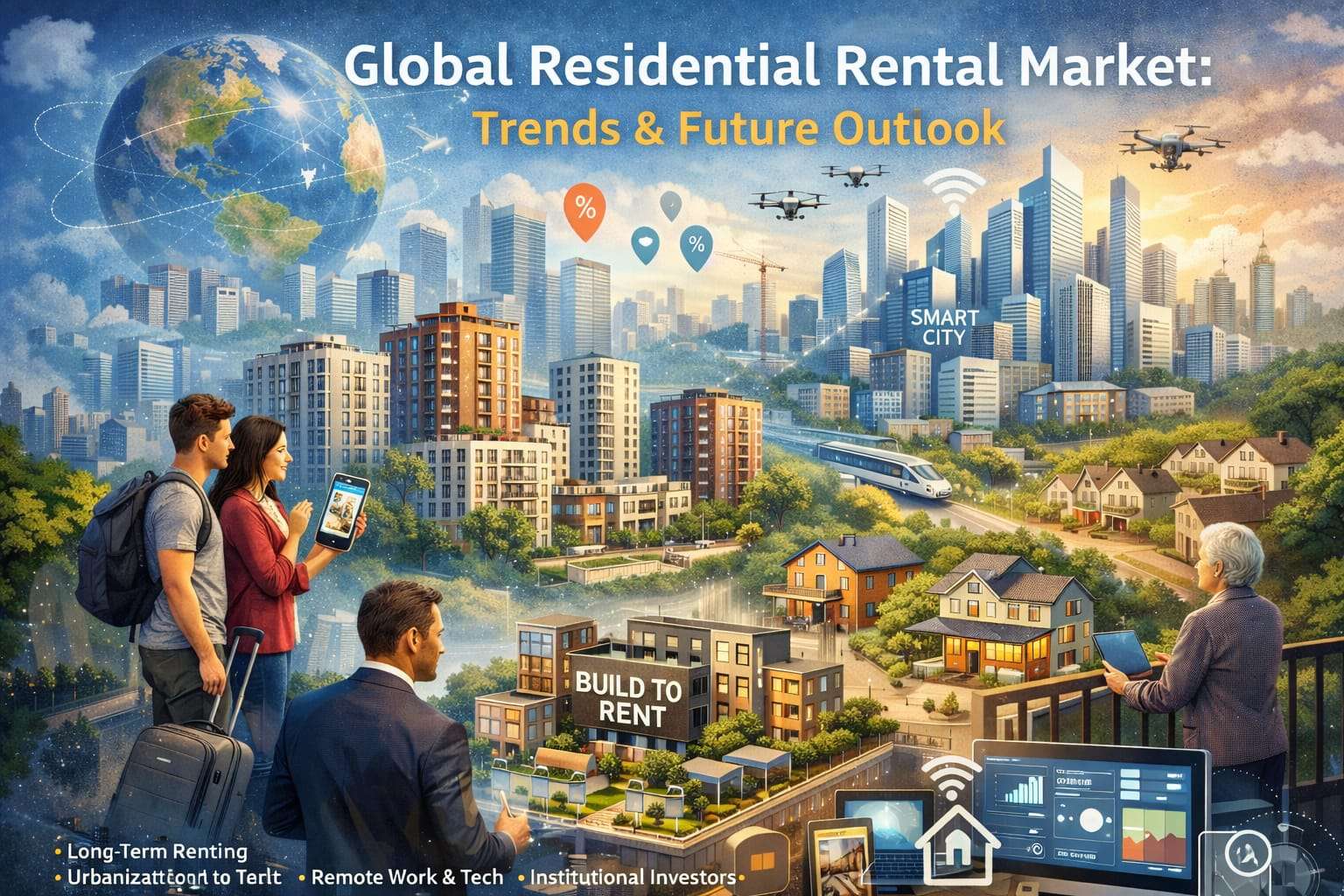
The global residential rental market is undergoing profound structural changes. Driven by economic uncertainty, demographic shifts, technological innovation, and evolving lifestyles, renting is no longer seen merely as a temporary solution but increasingly as a long-term housing choice. These processes are reshaping how people live today and will significantly influence housing markets in both the near and distant future.
1. The Shift from Ownership to Long-Term Renting
In many parts of the world, especially in major cities, homeownership has become less attainable due to high property prices, rising interest rates, and stricter mortgage regulations. As a result, long-term renting is becoming the default option for younger generations and middle-income households.
Near-term impact: Increased demand for rental units, especially in urban centers, putting upward pressure on rents.
Long-term impact: A structural “renting society,” where professional landlords, institutional investors, and build-to-rent projects dominate the market.
2. Urbanization and Demographic Change
Continued urbanization, combined with population growth in developing regions and aging populations in developed economies, is reshaping rental demand. Smaller households, single professionals, and elderly renters are seeking flexible, well-located housing.
Near-term impact: Strong demand for small and medium-sized apartments close to employment hubs and public transport.
Long-term impact: Cities will need more adaptable housing models, including mixed-use developments and age-friendly rental communities.
3. The Rise of Institutional Investors and Build-to-Rent
Large investment funds and real estate companies are increasingly entering the residential rental sector. Build-to-rent (BTR) projects—designed specifically for long-term renting—are expanding rapidly in North America, Europe, and parts of Asia.
Near-term impact: Improved quality, management, and amenities in rental housing, alongside higher professionalization of the sector.
Long-term impact: Greater market stability, but also concerns about affordability and market concentration if regulation does not keep pace.
4. Technology and Digitalization
Technology is transforming every stage of the rental process: online listings, virtual tours, AI-based tenant screening, smart home systems, and digital property management platforms.
Near-term impact: Faster, more transparent rental transactions and improved tenant experience.
Long-term impact: Data-driven pricing, predictive maintenance, and “smart rentals” that reduce costs and increase efficiency, potentially reshaping how rents are set and managed.
5. Remote Work and Geographic Flexibility
The expansion of remote and hybrid work has weakened the traditional link between housing and workplace location. Renters now have more freedom to choose where they live.
Near-term impact: Rising demand in secondary cities, suburbs, and smaller towns, easing some pressure on major metropolitan centers.
Long-term impact: A more balanced geographic distribution of rental demand, with new growth corridors outside traditional global cities.
6. Regulation, Affordability, and Social Pressure
Governments worldwide are responding to rising rents with regulations such as rent caps, tenant protections, and incentives for affordable housing development.
Near-term impact: Mixed effects—some regulations may stabilize rents, while others could reduce supply.
Long-term impact: The success or failure of these policies will shape whether rental markets remain accessible or become increasingly polarized between high-end and subsidized housing.
Outlook: What the Future Holds
In the near future (next 5 years), the residential rental market is likely to remain tight, with strong demand, rising rents in many regions, and continued growth of institutional rental housing.
In the long term (10–20 years), renting will be a central pillar of global housing systems. Technology, sustainability requirements, and demographic realities will push the market toward more efficient, flexible, and professionally managed rental models. The key challenge will be balancing investment returns with affordability and social stability.
Conclusion:
Residential renting is no longer a secondary segment of real estate—it is becoming the backbone of housing in much of the world. How governments, investors, and communities respond to these ongoing processes will determine whether the future rental market is inclusive and resilient, or increasingly divided.