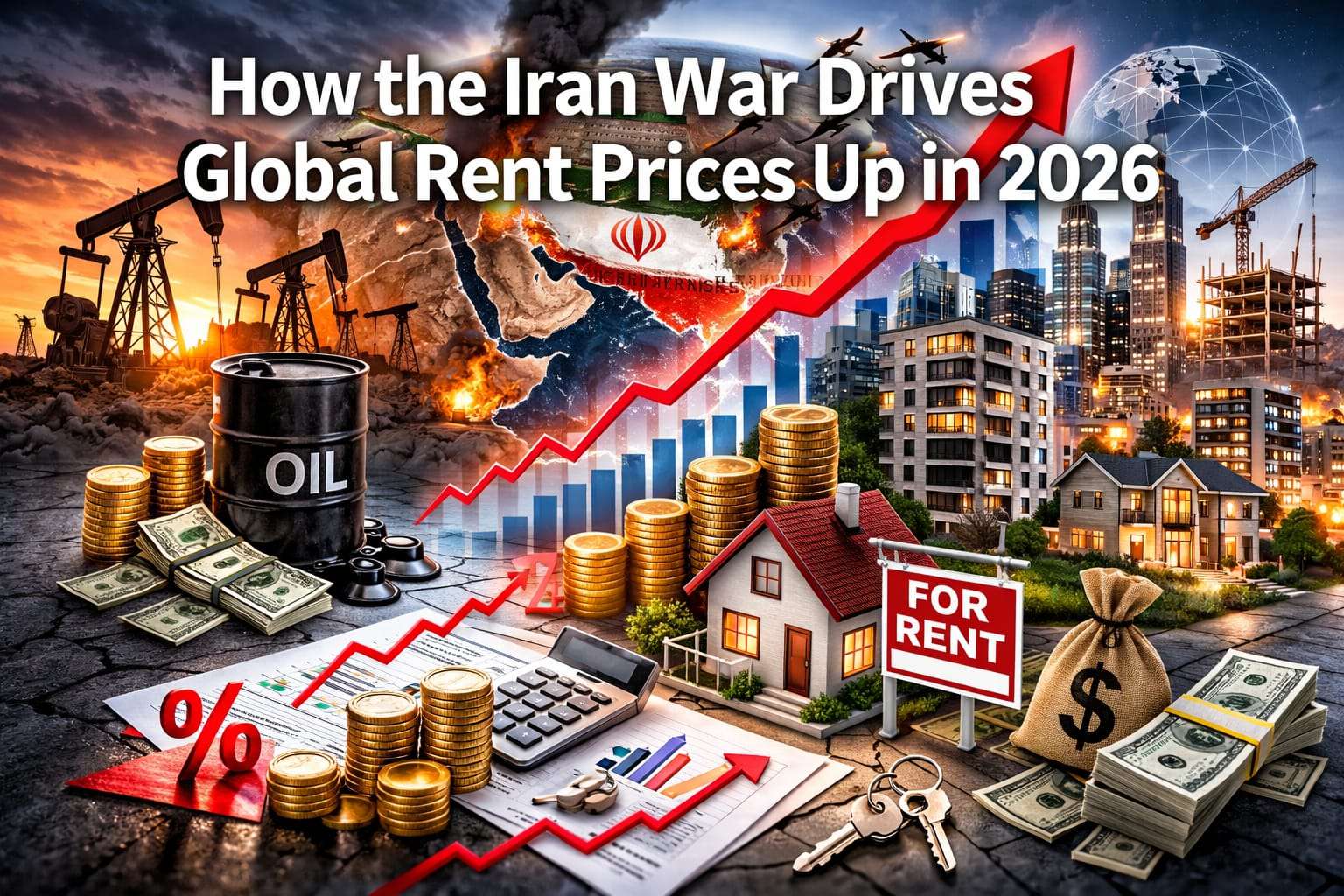
The 2026 Iran war has quickly evolved from a regional military conflict into a global economic shock, with direct consequences for housing markets worldwide. While the most visible effects have been in energy and financial markets, the rental housing sector is now experiencing significant secondary impacts—driven by inflation, interest rates, and supply constraints.
1. The Core Mechanism: From War to Rent Increases
The connection between the Iran war and rising rents is indirect but powerful, operating through three main channels:
1.1 Energy Prices → Inflation
The conflict has disrupted oil and gas supply routes—especially around the Strait of Hormuz—causing sharp increases in global energy prices. �
The Guardian +1
Oil prices surged to over $100 per barrel
Transport, construction, and utility costs increased globally
Inflation pressures intensified across major economies
This matters because housing costs—especially rents—are highly sensitive to inflation.
1.2 Inflation → Higher Interest Rates
Central banks worldwide have responded cautiously, delaying rate cuts or even raising rates due to inflation fears tied to the war. �
News.com.au
Mortgage rates in the U.S. climbed back above ~6% �
KSL News
UK mortgage deals were withdrawn and repriced upward �
The Guardian
Higher borrowing costs reduce home purchases, forcing more people into renting.
1.3 Mortgage Costs → Rental Demand Surge
As buying becomes less affordable:
Potential homebuyers remain renters longer
Investor activity slows (less new housing supply)
Rental demand increases while supply tightens
This imbalance pushes rents upward globally.
2. Evidence: Rental Market Reactions
Early data and industry surveys already show clear trends:
Around 20% of property professionals expect rents to rise in the near term �
Letting Agent Today
Landlord costs are increasing due to financing and regulatory pressure �
landlordzone.co.uk
Housing supply remains constrained across major markets
In parallel, global housing systems were already under pressure from post-COVID supply shortages, meaning the war acts as an amplifier rather than a root cause.
3. Regional Impact Patterns
United States
Mortgage rates rising → reduced home buying
Structural housing shortage (~2.5 million homes) persists �
➡️ Result: Gradual but persistent rent increases
Reuters
Europe (UK & EU)
Mortgage volatility and deal withdrawals
Reduced landlord participation
➡️ Result: Short-term rent spikes, especially in urban areas
Emerging Markets
Strong exposure to energy and food inflation
Reduced purchasing power
➡️ Result: Rent increases combined with affordability crises
4. Secondary Effects on Rental Prices
Beyond the direct economic channels, the war introduces additional pressures:
4.1 Construction Slowdown
Rising costs of materials and transport delay new housing projects:
Developers postpone projects
Supply pipeline shrinks
➡️ Long-term upward pressure on rents
4.2 Investor Uncertainty
Global real estate investors face higher risk:
Capital shifts to safer assets
Fewer rental developments
➡️ Reduced future housing supply
4.3 Migration and Displacement
Geopolitical instability often leads to regional migration:
Increased demand in safer countries
Pressure on rental markets in key cities
➡️ Localized rent spikes
5. Future Outlook (2026–2028)
Scenario 1: Short War (Stabilization)
If the conflict de-escalates quickly:
Energy prices normalize
Interest rates stabilize
➡️ Rent growth slows but remains elevated
Scenario 2: Prolonged Conflict (Most Likely Risk)
If instability continues:
Persistent inflation
Higher-for-longer interest rates
Ongoing supply shortages
➡️ Global rents continue rising steadily, especially in major cities
Scenario 3: Global Economic Slowdown
If the war triggers recession:
Demand weakens
Rent growth slows or temporarily declines
However, due to housing shortages, sharp rent drops are unlikely.
6. Key Strategic Insight
The Iran war is not creating a new housing crisis—it is accelerating an existing one.
The global rental market was already characterized by:
Supply shortages
High construction costs
Urban demand concentration
The war intensifies all three factors simultaneously.
Conclusion
The Iran conflict is reshaping the global rental landscape through a cascade effect:
War → Energy Shock → Inflation → Interest Rates → Housing Affordability → Rent Increases
In the near term, renters worldwide should expect:
Higher monthly rents
Reduced availability of housing
Increased competition in major cities
In the long term, unless supply significantly improves, the war’s impact will likely leave a lasting structural imprint on global rental markets, reinforcing a trend toward higher and more volatile rents worldwide.